
New Articles Every Monday
New Articles Every Monday

A Brave, New Nevada
What happens when pleasure becomes the highest good and suffering the greatest evil?
In Aldous Huxley's Brave New World, humanity has traded sacrifice, family, and genuine love for comfort and convenience.
Nearly a century later, Nevada's passage of Question 6 raises difficult questions about freedom, human dignity, and the value of life.
In my latest essay, “A Brave, New Nevada,” I explore these questions through the lens of Huxley's dystopia and Catholic theology, concluding with an invitation to nine days of Eucharistic reparation.
Read the full essay at CodekasWrites.com.
#CodekasWrites #BraveNewWorld #Nevada #Question6 #CatholicWriting
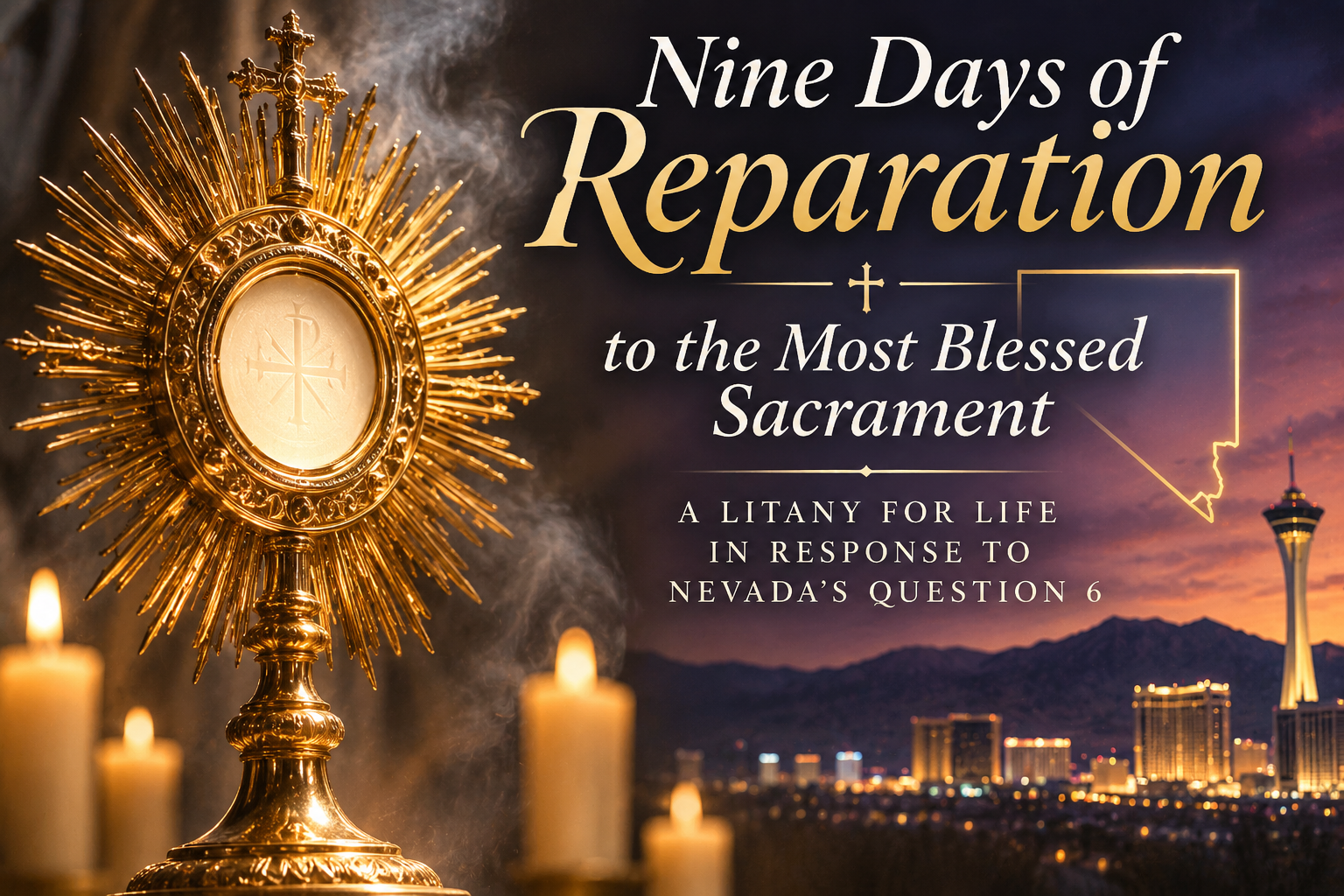
Litany of the Blessed Sacrament
Nine Days of Reparation to the Most Blessed Sacrament
In light of Nevada's passage of Question 6, I invite my fellow Catholics to join me in offering nine days of prayer and reparation before our Eucharistic Lord.
For nine consecutive days, let us pray the Litany of Reparation to the Most Blessed Sacrament, seeking forgiveness for our failures to uphold the sanctity of human life, for the sins committed against the dignity of the unborn, and for the times we have failed to answer the demands of Christian love.
May these nine days be offered for the unborn, for mothers and fathers, for those wounded by abortion, and for the conversion of hearts throughout Nevada.
Above all, may we turn to Christ, truly present in the Most Holy Eucharist, whose perfect sacrifice reminds us that love is not measured by convenience, but by the willingness to give ourselves entirely for another.
Most Blessed Sacrament, have mercy on us.
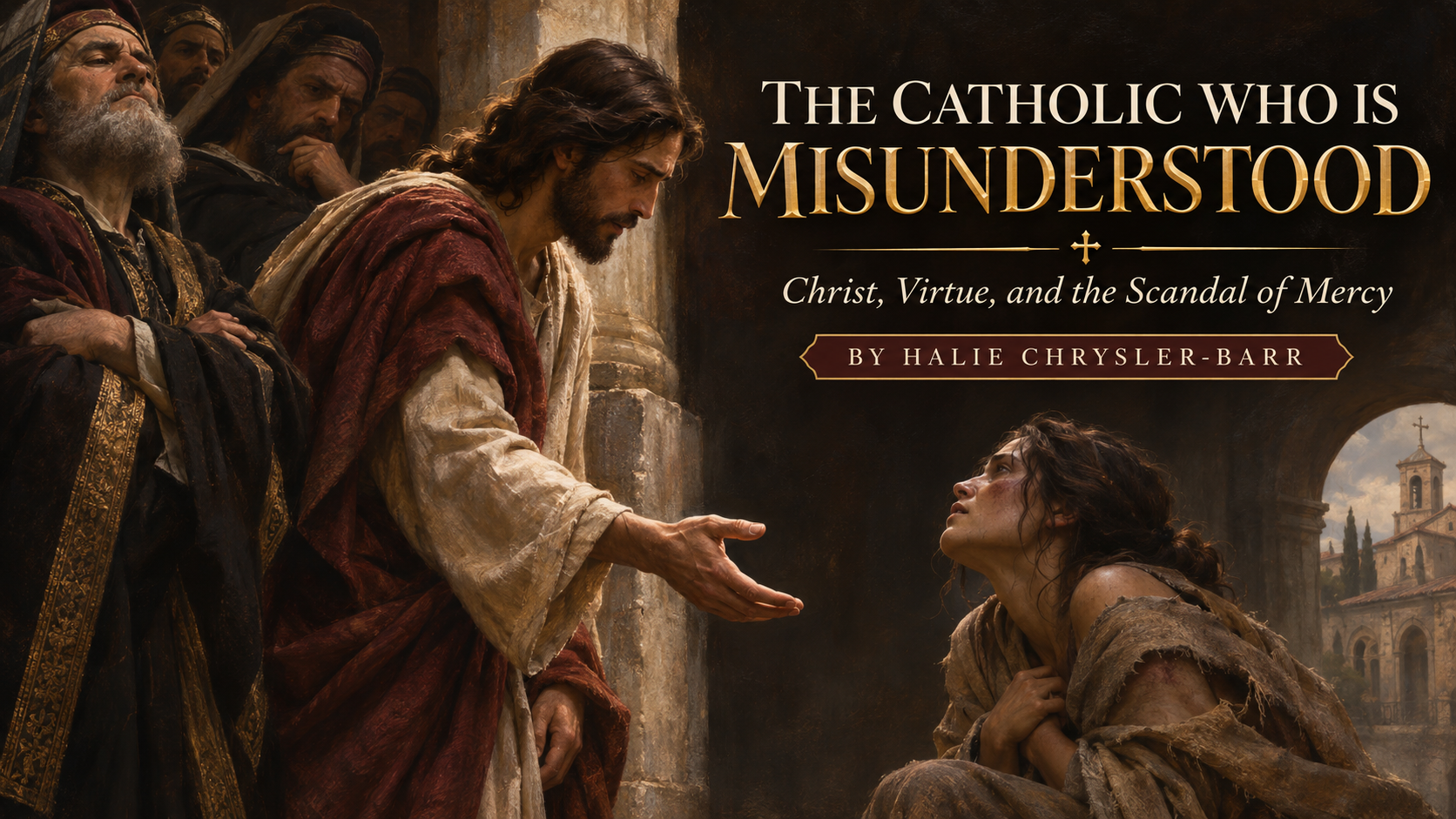
The Misunderstood Catholic
In a world that demands ideological allegiance, the faithful Catholic often finds himself misunderstood by everyone. Yet Christianity refuses to separate what the world insists must remain divided: truth and mercy, holiness and compassion, justice and love. Halie Chrysler-Barr explores why authentic Catholicism cannot be confined to political categories—and why the Christian's ultimate allegiance belongs to Christ alone.

(Almost) All Souls’ Day
Can our prayers bring relief to the souls in hell? A surprising petition at youth group leads to an exploration of Pope Gregory the Great, a pagan Roman emperor, and a remarkable question: If God exists beyond time, could our prayers today reach someone at the moment of their death centuries ago?

Hollowed and Hallowed
A carved pumpkin, a flickering candle, and a prayer for the dead. Beneath Halloween's familiar traditions lies a beautiful Catholic reflection on light, remembrance, and the hope of eternal life.

I Believe in the Resurrection of the (Un)Dead
The zombie is more than a creature of horror. It offers a grotesque parody of the Christian doctrine of the resurrection of the body—and reveals why Catholicism insists that salvation belongs to the whole human person, body and soul.

The Beast and the Common Good: Werewolves, Moral Agency, and the Common Good
Werewolf stories force us to ask difficult questions about danger, responsibility, exclusion, and human dignity. Through the lens of Catholic social teaching, the monster at the margins becomes a test of how justly a community treats those it fears.

The Dark Imitation: Vampires and Eternal Life
Vampires imitate some of Christianity’s greatest promises—resurrection, blood, immortality, and eternal life—but twist each one into something hollow and horrifying.
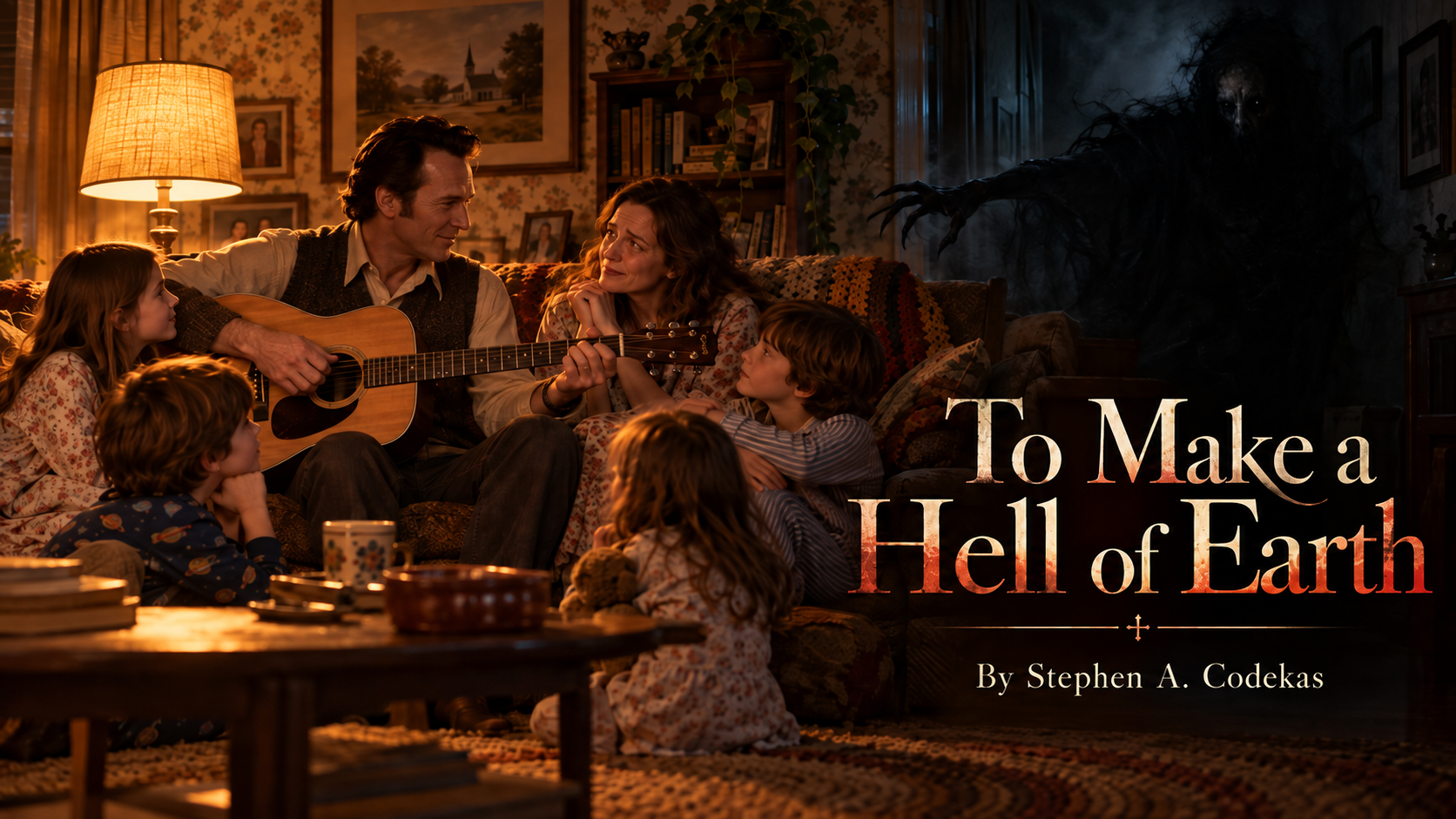
To Make a Hell of Earth
In The Conjuring 2, the most important battle may begin before the exorcism. A family scattered by fear is gathered again, revealing something deeply Christian: Heaven is communion perfected, while Hell is separation. Perhaps the demonic hates the family precisely because it reflects what Hell has forever lost.

Where Are You?
In Genesis, God walks with Adam and Eve “in the cool of the day.” After the Fall, that intimacy is shattered—but God never stops reaching for humanity. From Eden to the Tabernacle, from the Incarnation to the garden of the Resurrection, Scripture tells the story of a God who keeps asking the same question: “Where are you?”